Why Does Time Feel Faster as We Grow Older?
This is a modified py-6 that occupies the entire horizontal space of its parent.
There is a strange feeling that often comes with adulthood.
The days are full.
The calendar is busy.
The responsibilities are real.
Yet somehow, time seems to disappear faster than before.
A week passes quietly. A month blends into the next. A year can feel thin, as if it moved too quickly to fully remember.
This feeling is not unusual. As we grow older, our experience of time often changes. It can feel as if life is speeding up, not because the clock has changed, but because the way we perceive and remember time has changed.
For me, a strategic leadership coach, this is not only a reflection on age. It is also a reminder about how we live, lead, build, and create meaning in our daily lives.
Time does not only pass.
Time is remembered.
A Simple Way to Understand Perceived Time
One way to understand why time feels faster is to think about proportion.
When you are one year old, one year is your entire life.
When you are ten, one year is one-tenth of your life.
When you are forty, one year is only one-fortieth of your life.
In that sense, each year becomes a smaller part of the life you have already experienced. The older we get, the smaller one year feels in relation to everything that came before it.
This is not a perfect scientific measurement of time perception. It is a simple model. But it helps explain something many people feel intuitively: The older we get, the more quickly the years seem to move.
There is also another layer to this.
Most people do not have continuous, detailed memories from the first few years of life. Much of what we actively remember as “life experience” begins later in childhood. If we think of remembered life as beginning around early childhood, and we compare that with a typical long life, the feeling of time passing can become even more interesting.
By early adulthood, a person may already feel as if a large portion of their remembered life has passed. By midlife, each year may feel even more compressed.
Again, the exact numbers are not the point.
The point is that time is not experienced evenly.
A year at twenty does not feel the same as a year at forty, because the mind is not only counting time. It is comparing, storing, compressing, and remembering it.
Why Childhood Summers Felt Longer

Many people remember childhood summers as long, vivid, and full.
A few weeks could feel like an entire chapter.
Waiting three days to visit a best friend could feel endless.
A school holiday could feel like a world of its own.
Part of this is because childhood is filled with firsts.
The first time learning something.
The first time traveling somewhere new.
The first time meeting certain people.
The first time making sense of the world in a new way.
When something is new, the brain pays more attention. New experiences often create richer memory markers because they carry more detail, emotion, novelty, and contrast.
That is why unfamiliar experiences can feel longer in memory.
The mind has more to store.
It remembers the setting.
It remembers the feeling.
It remembers the difference.
A childhood summer may feel long not only because there was more free time, but because the experience was filled with moments the mind could not easily compress.
How Routine Compresses Adult Life

Adulthood often brings structure.
We wake up at similar times.
We check the same messages.
We take the same route.
We work through familiar responsibilities.
We repeat similar conversations, tasks, and habits.
There is nothing wrong with routine. Routine can create stability, discipline, and progress. It can support health, business, family, and long-term goals.
But when life becomes only routine, something begins to happen.
The days start to blur.
The mind has fewer distinct moments to mark and remember. When many days look and feel similar, the brain may store them as one general pattern rather than as separate, meaningful chapters.
That is why we can look back and say, “I don’t even know where the last few years went.”
It is not always because nothing happened.
It may be because too much of life became easy for the mind to compress.
A year can be busy and still feel thin.
A life can be productive and still feel under-remembered.
This is why time can feel as if it is accelerating.
Not because time itself is moving faster, but because fewer moments are standing out clearly enough to be remembered.
Memory Density: A Different Way to Think About Time
If we want time to feel richer again, we need to think beyond productivity.
We need to think about memory density.
Memory density is the number of meaningful, distinct, and emotionally recognizable moments we create within a period of time.
A year with few new experiences may pass quickly in memory.
A year filled with learning, travel, creation, challenge, deep conversations, and meaningful decisions may feel fuller because it carries more memory markers.
This is why a short trip can feel longer than an ordinary month.
It is why starting a new project can give a season a clear identity.
It is why learning a new skill can make life feel more alive.
It is why building something meaningful can turn time into a chapter.
The goal is not to make life busier.
The goal is to make life more memorable.
How to Make Time Feel Richer Again

To make time feel richer, we do not need to completely redesign our lives overnight.
We need to create more moments the mind cannot ignore.
That can be simple.
Learn something new.
Go somewhere unfamiliar.
Take a different route.
Start a meaningful conversation.
Build something you care about.
Begin a creative project.
Try something that challenges your usual identity.
Make one decision that marks the start of a new chapter.
These moments create contrast.
They wake up attention.
They give the mind something to hold.
And over time, they make life feel fuller.
As a strategic leadership coach, Bonnie Wu often speaks to the importance of clarity, awareness, and intentional daily practice. That applies not only to business growth, but also to the way we experience time.
A meaningful life is not built only through major milestones.
It is built through the moments we choose not to sleepwalk through.
The Role of New Experiences
New experiences are not always comfortable.
Sometimes they feel uncertain.
Sometimes they feel awkward.
Sometimes they make us question whether we are ready.
But unfamiliar does not mean wrong.
New experiences ask us to pay attention. They pull us out of automatic living. They require us to observe, adapt, decide, and participate more fully.
That is part of their value.
If life has started to feel fast, flat, or repetitive, the answer may not be to do more of the same.
The answer may be to bring more presence and novelty into the life you already have.
Not novelty for the sake of distraction.
But meaningful newness.
The kind that helps you grow.
The kind that gives your life texture.
The kind that creates a chapter you will remember.
A Reminder for Midlife and Beyond
For many people, reaching a new decade can feel like a countdown.
Thirty.
Forty.
Fifty.
Each milestone can make us more aware of time.
But these ages do not need to feel like loss. They can become reminders.
A reminder to live more richly.
A reminder to create more deliberately.
A reminder to stop letting years blur together.
A reminder to build a life with chapters worth remembering.
The question is not only:
“How much time do I have?”
The better question may be:
“How fully am I experiencing the time I have?”
This shift matters.
Because a long life is not only measured by duration.
It is also measured by depth.
The Daily Practice of Remembering Your Life
The Daily Practice is not about making every day extraordinary.
It is about living with enough awareness that ordinary days do not disappear unnoticed.
You do not need every day to become a major event.
You only need to create small moments of attention, meaning, growth, and memory.
A walk somewhere new.
A sentence written honestly.
A conversation that matters.
A lesson learned.
A decision made with clarity.
A project started before you felt fully ready.
These are small moments, but they are not meaningless.
They are how life becomes textured again.
They are how time becomes less blurry.
They are how the year begins to feel like a chapter, not just a passing block of time.
Conclusion
Give Today One Moment Worth Remembering
If your days feel like they are disappearing, it may not be because time is moving faster.
It may be because life has become too easy for your mind to compress.
To make time feel richer, create moments your mind cannot ignore.
Learn something new.
Go somewhere unfamiliar.
Start a meaningful conversation.
Build something you care about.
Break one small routine.
You do not need to change your whole life overnight.
You only need to give today one moment worth remembering.
That is The Daily Practice.
Growth does not always feel graceful.
Sometimes, it feels awkward.
Sometimes, it feels uncertain.
Sometimes, it makes you question whether you are ready.
But discomfort does not always mean you are doing something wrong. It may simply mean you are learning how to move in a new direction.
This is easy to forget.
When something is new, the mind often interprets it as difficult. The unfamiliar can feel like resistance. A new role, a new responsibility, a new level of visibility, a new business challenge, or a new way of thinking can all feel uncomfortable at first.
It feels hard because it is new.
Give yourself time to grow into it.
That does not mean you are behind. It does not mean you are failing. It does not mean you are not capable.
It may simply mean you are becoming familiar with the next version of yourself.
For Bonnie Wu, strategic leadership coach, mindset is not about forced positivity. It is not about pretending every challenge is easy.
It is about learning how to interpret what you are experiencing with more clarity.
Growth often feels unfamiliar before it feels natural.
- The first time you lead at a new level, it may not feel smooth.
- The first time you build a new habit, it may not feel automatic.
- The first time you set a stronger boundary, it may not feel comfortable.
- The first time you make a bigger decision, it may not feel easy.
But ease is not always the starting point. Sometimes, ease is built through practice.
That is why the books we return to matter.
The right book does more than give information. It helps us notice our patterns, question our assumptions, and return to our daily practice with more clarity.
Here are three books worth revisiting for mindset, focus, and growth.
Atomic Habits by James Clear
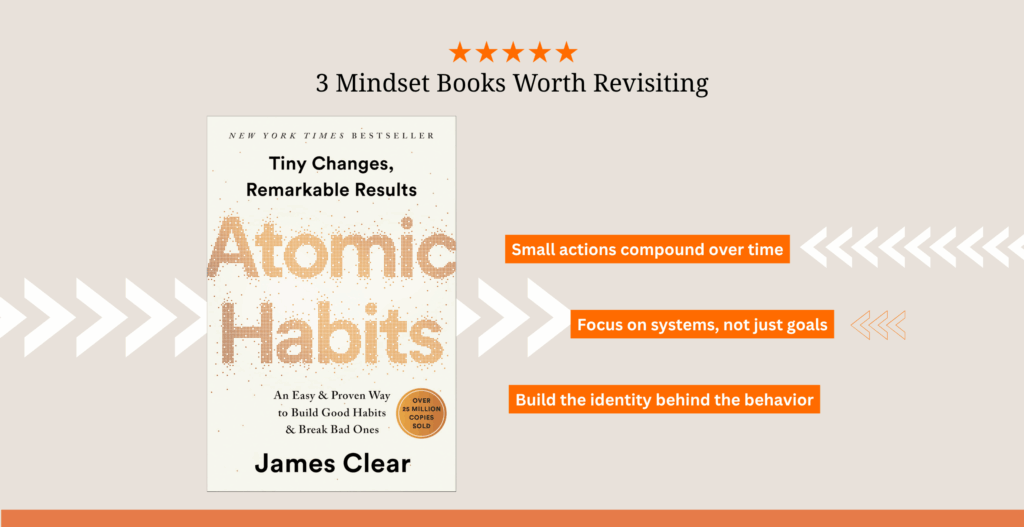
Atomic Habits is a practical reminder that meaningful change is often built through small actions repeated consistently.
- It shifts the focus from big goals to daily systems.
- It shows how identity shapes behavior.
- It makes consistency feel practical, not overwhelming.
This connects deeply with The Daily Practice because real transformation rarely comes from one dramatic decision. More often, it comes from the small choices we repeat until they become part of who we are.
Stumbling on Happiness by Daniel Gilbert
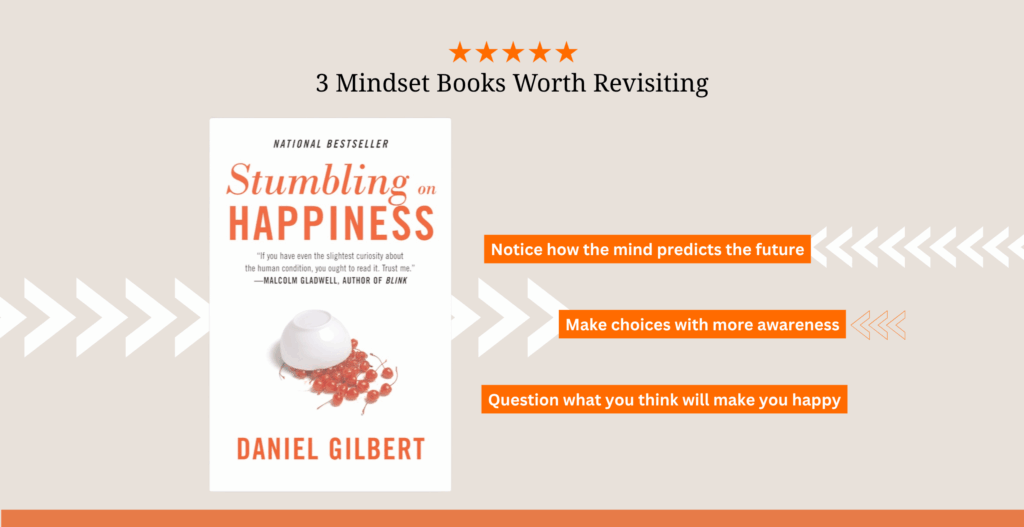
Stumbling on Happiness invites us to question how we imagine the future.
It explores how the mind predicts what will make us happy, and how often those predictions can be incomplete.
For anyone building a life, business, or leadership path with intention, this is an important reminder.
We do not always make decisions based on reality. Sometimes, we make them based on what we imagine will bring certainty, success, or happiness.
When we understand this, we can make choices with more awareness.
Flow by Mihaly Csikszentmihalyi
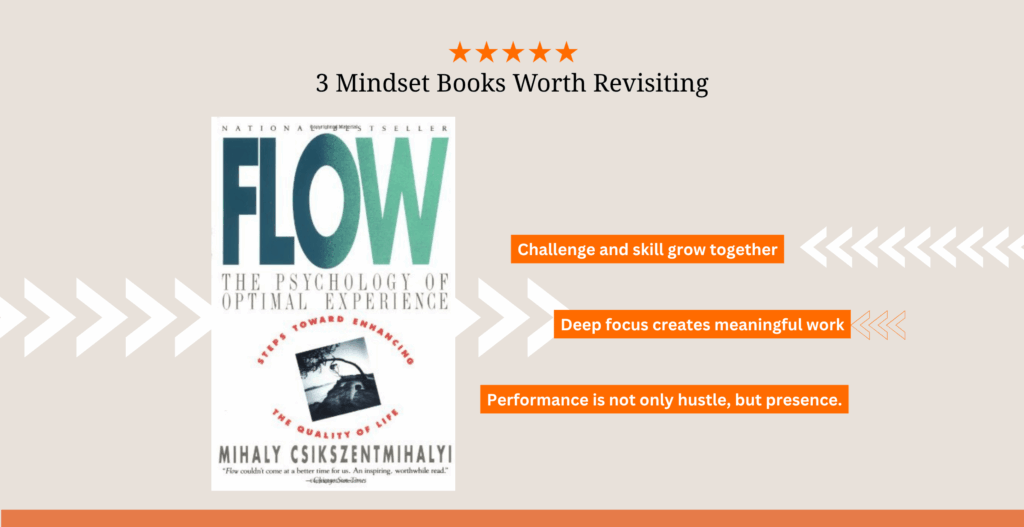
Flow explores the state of deep focus and full engagement.
It reminds us that meaningful work is not only about effort. It is also about attention, presence, challenge, and skill.
This is a powerful idea for entrepreneurs, leaders, and builders.
Performance is not always about pushing harder. Sometimes, it is about creating the conditions that allow your best work to emerge.
Conclusion
Together, these three books point to a simple idea:
Growth is not only about doing more.
It is about thinking more clearly. Practicing more intentionally. Building systems that support who you are becoming.
New growth rarely feels natural at the beginning.
It can feel awkward, uncertain, or slower than expected.
But unfamiliar does not mean wrong.
- Give yourself time.
- Give yourself grace.
- Give yourself permission to grow into it.
That is The Daily Practice.
Hard work matters.
It builds discipline. It creates momentum. It proves commitment.
But hard work alone does not always lead to the results we want.

Many entrepreneurs, leaders, and builders work harder, push longer, and carry more responsibility, only to find themselves repeating the same patterns. They stay busy, but not always clearer. They make decisions, but not always from a place of confidence. They chase growth, but sometimes from an old belief that is quietly shaping every choice they make.
As a strategic leadership coach, Bonnie Wu often returns to one important idea:
Every business is built twice.
First, in the beliefs you practice.
Then, in the decisions you make.
- If you believe you have to do everything yourself, you may build a business that depends on you.
- If you believe rest is weakness, you may build success around exhaustion.
- If you believe wealth requires constant sacrifice, you may keep choosing pressure over freedom.
These beliefs may feel responsible. They may even feel familiar. But over time, they can become the invisible architecture of your business.
That is why awareness matters.
Before you change your strategy, it helps to check the belief behind the strategy.
- Are you making this decision from clarity, or from fear?
- Are you saying yes because it supports your vision, or because you feel you need to prove yourself?
- Are you building a system that can grow, or are you building around your own ability to carry everything?
These are not small questions. They influence the way you lead, delegate, invest, communicate, rest, and grow.
The shift begins when you pause long enough to notice what has been guiding you.
One simple way to begin is what Bonnie Wu calls The One-Note Practice.
Start with one note.
Write down one thought that is shaping the way you are moving through the day.
It may be:
- I am ready for better challenges.
- I will do my best today.
- My effort deserves wealth, joy, and freedom.
- I welcome better possibilities into my life.

Place that note somewhere you can see it. On your laptop. Beside your screen. Inside your planner. Near your morning coffee.
Let it become your Today Page.
A small space to hold one better thought.
The power of this practice is not in the paper itself. It is in the pause. It is in the moment you choose to become aware of the thought you are carrying.
Awareness changes the pattern.
Belief changes the decision.
Action changes the result.
Old beliefs create old patterns. New awareness creates better choices.
This is why The Daily Practice is not about doing more for the sake of doing more.
It is about returning, daily, to the thoughts, systems, and decisions that help you build with more clarity.
Conclusion
Hard work can take you far.
But when hard work is guided by clearer beliefs, better systems, and intentional action, it becomes something much more powerful.
It becomes sustainable growth.
That is The Daily Practice.
In the field of mental health, “low self-worth” is a very common yet often overlooked concept. Many people, after experiencing setbacks in life, work, or romantic relationships, feel inadequate, unworthy of love, or that their existence lacks meaning. To help more people understand the causes of low self-worth, this article will explore its psychological roots and formation mechanisms.
1. Childhood Experiences
Childhood is the foundational stage for an individual’s self-worth system. Whether a person is prone to low self-worth is profoundly and enduringly linked to their early life experiences.
- Family Atmosphere
In many families, the expression of love is mistakenly tied to harsh criticism. Parents or primary caregivers focus excessively on the child’s mistakes and shortcomings. They believe that “pointing out problems is being responsible,” systematically ignoring the affirmation of the child’s effort and small progress. This gradually leads the child to develop a distorted cognitive logic. “My value is conditional—it depends entirely on whether I am perfect.”
For example, a child excitedly shows off a test paper with a score of 95, but the parent questions, “How did you lose those 5 points?” Long-term exposure to such interactions teaches the child not to strive for excellence but a more fundamental belief: “I am never good enough.”

This harsh criticism, once internalized, forms a rigid self-monitoring system. Even the smallest mistake is magnified and perceived as a direct threat to self-worth. This mechanism is the source of the mutual nourishment between low self-esteem and perfectionism in adulthood.
- Emotional Neglect and Lack of Recognition
Emotional neglect is a more insidious and pervasive form of erosion. It is a kind of “existential absence.” The child’s emotional needs are consistently ignored, downplayed, or refused to be responded to. When they excitedly share, they receive only indifferent glances. When they are afraid, no one offers a safe embrace.
The core message the child receives is, “Your feelings don’t matter; your existence itself is insufficient to warrant attention.” This deep experience fosters a far-reaching core belief: “I am unworthy of love.” They may desperately crave recognition in intimate relationships, yet feel insecure and doubtful when they receive affection.
- Internalization of Comparative Culture
When parents and teachers frequently use others as benchmarks to measure children, they often cause children to completely relinquish the right to define their self-worth to the external world. This kind of comparison can apply to any dimension, including grades, talents, appearance, and personality. What children learn from this is not to appreciate their own uniqueness but a cruel value logic. My value lies not in “who I am,” but in “whether I am better than someone else.”
This directly leads to two serious consequences: one is an extremely fragile sense of self-worth. Self-worth is entirely dependent on the results of comparison. Once one “falls behind” in a certain dimension, the entire self-worth system faces collapse. The other is the loss of one’s true self. In order to win in comparisons, children may abandon their own identity to conform to external standards. This self-perception shaped by external comparison is one of the most common socialization causes of low self-worth.
These childhood experiences do not exist in isolation. They often intertwine to form a fine web, collectively weaving an individual’s “initial filter” for viewing themselves. “I must be perfect to have value.” “My feelings and needs are a burden; I don’t deserve to be loved.” “I only deserve respect if I surpass others.” A foundation of low self-esteem stemming from childhood makes an individual more susceptible to rejection and denial in adulthood.
2. Social Environment and Cultural Pressures
The fast pace and high competitiveness of modern society create an invisible field of comparison. Individuals are highly susceptible to feelings of insecurity within this environment. In particular, the following socio-cultural factors continuously activate and amplify the experience of low self-worth:
- The “Comparison Trap” of Social Media
When users are frequently exposed to seemingly perfect slices of life from others—world travel, career advancement, harmonious families—distorted references are easily generated. This continuous social comparison fosters “comparative thinking”: happiness, success, and beauty are all assumed to have “standard answers.” When individuals find that their own experiences cannot match these presented “perfect templates,” low self-worth is continuously activated and deepened through repeated comparisons.

- Achievementism
When society reduces personal value to quantifiable external indicators (salary, position, property, education), individuals easily fall into the trap of “value outsourcing.” This instrumentalized self-perception causes people to align their sense of self-worth with constantly changing external standards. Even when certain standards are met, the underlying low self-worth is not eliminated by external achievements.
- The Invisible Discipline of Aesthetic Culture
Promoted by commercial media, certain physical characteristics or appearance standards are constructed as so-called “standards.” This invisible pressure exists not only in the comprehensive scrutiny of women’s appearance, age, and body but also extends to multiple dimensions such as masculine traits. When individuals find themselves differing from mainstream aesthetics, they see their bodies as objects that need to be modified and concealed. This sentiment directly erodes the foundation of self-esteem, concretizing low self-worth into persistent dissatisfaction and anxiety about the body.
3. Negative Thinking
Low self-worth is inextricably linked to one’s mindset. It causes individuals to unknowingly fall into a cognitive loop of self-doubt and self-denial. Common negative thinking patterns include:
- Excessive Self-Blame
Habitually taking responsibility for everything, even things beyond one’s control. This sense of guilt subtly reinforces the belief that “I am the root of the problem.” The foundation of self-worth is thus continuously eroded by guilt.
- Incorrect Value Judgments
Being that only perfection is worthwhile, feeling “I am a failure” at the slightest mistake. This mindset is essentially an extreme form of value judgment. Within this framework, an individual’s value is reduced to a binary switch of “success” or “failure.” Any minor imperfection triggers an alarm bell for the collapse of the entire value system. Living long on the edge of “all or nothing” anxiety causes a loss of the composure and acceptance to experience “good enough.”
- Magnifying Weaknesses
Constantly focusing on one’s shortcomings while ignoring one’s abilities and achievements reinforces a negative self-image. This is a classic example of cognitive attention bias. Over time, this selective focus builds a self-validating closed loop. It seeks only evidence that proves one’s worthlessness, ignoring contradictory evidence. This makes the belief in low self-worth seem “unassailable.”
These erroneous cognitive patterns are unconsciously repeated and deepened, making low self-worth difficult to improve. Negative thinking triggers negative emotions and avoidance behaviors. And the results of these behaviors are, in turn, interpreted by negative thinking as new evidence that “I really am incompetent.”
4. Interpersonal Relationships
An individual’s experiences in interpersonal relationships profoundly influence the construction of their self-worth. When a person consistently receives negative feedback or experiences emotional harm in a relationship, low self-worth is often reinforced and solidified in this interaction.
- Unhealthy Intimate Relationships
When intimate relationships involve belittling, neglect, or emotional manipulation, it evolves into a systemic mechanism that erodes self-worth. Individuals in such relationships for a long time gradually accept a distorted perception: “This is the only treatment I deserve” or “I don’t deserve respect and care.” More insidiously, emotional manipulation (such as the gaslighting effect) can cause people to gradually doubt their own feelings and judgments. They attribute problems in the relationship to their own shortcomings, thus completely undermining the foundation of their sense of self-worth on an emotional level.

- Negative Workplace Environments
The workplace is an important source of social identity. Being in a high-pressure, negative, or overly competitive environment for a long time, or constantly receiving negative feedback or experiencing unfair treatment, gradually erodes an individual’s sense of professional efficacy. This erosion of self-identity leads individuals to doubt their overall capabilities. Especially when individuals equate career achievement with personal value, workplace setbacks directly translate into profound self-denial.
- Social Exclusion and Relationship Trauma
Whether it’s school bullying or social exclusion in adulthood, these experiences cause a fundamental questioning of one’s right to belong. This perception solidifies subconsciously into a relationship script, causing individuals to either excessively ingratiate themselves to avoid further rejection or preemptively isolate themselves to protect their fragile self-esteem in future social interactions. Both coping mechanisms continuously reinforce the negative self-prediction of “I cannot fit in.”
Interpersonal relationships are like a mirror. Prolonged exposure to a distorted mirror leads one to gradually believe that the distorted image in the mirror is their true self. These negative relationship experiences deepen low self-worth precisely because they not only cause immediate harm but also reshape an individual’s core beliefs about themselves and others.
Conclusion
Low self-worth doesn’t develop overnight, nor does it disappear in an instant. It’s often a complex interplay of factors, including childhood experiences, sociocultural influences, negative cognitions, and interpersonal relationships. Understanding the causes of low self-worth is the first step towards change. When we see our own value and understand our uniqueness, our sense of self-worth gradually increases. Through consistent self-care, rational reflection, and a support system, low self-worth can be improved.
Time management has become an important ability for individuals to improve efficiency, reduce stress and achieve goals in today’s fast-paced work and life environment.
Whether you are a professional, a student, or someone who is improving yourself, a scientific and efficient time management system can help you better control the rhythm of work and life. This article will provide an in-depth analysis of how to establish a time management system that suits you from several aspects.
1. Clear goals
The first step in establishing an effective time management system is to set clear goals. A clear goal system is like a compass when sailing. It guides the way forward and helps you stay focused in the face of various tasks and distractions. This allows you to make time allocation decisions that serve your long-term interests.
- Set Long-term And Short-term Goals
This is the cornerstone of building a time management system. Long-term goals are usually life plans or career development visions for the next 1-5 years. It determines the overall direction of time investment. Short-term goals are to break down long-term goals into actionable weekly plans or daily tasks. This ensures that every unit of time is contributing to achieving long-term goals. For example, if the long-term goal is to become an expert in a certain field, the short-term goal can be to read two professional books every month and complete a practical project every week. This hierarchical goal-setting method makes abstract ideals concrete and feasible and also makes time management more controllable and operable.

- Make Sure Your Goals Are Specific
This is a critical part of goal setting. A high-quality goal should comply with the SMART principles: Specific, Measurable, Achievable, Relevant, and Time-bound. Specificity requires clear goals. For example, it is not “improve English level,” but “reach 7 points in IELTS.” Measurability means having quantitative standards. Such as “recite 200 words every week.” Achievability emphasizes that goals must be realistic, challenging but not deviated from realistic conditions. Relevance ensures that goals are consistent with the direction of life. Time-boundness sets a clear deadline for completion of the goal. This is an effective method that can improve execution and greatly reduce time waste.
2. Rational Planning
The core of time management lies in how to scientifically allocate limited time resources. Establishing a systematic planning process can help you truly use your time effectively.
- Daily Planning
This is the foundation of time management. It is recommended to spend 5-10 minutes each morning or the night before using pen and paper or digital tools to create a list of tasks to be completed that day. This list should include not only work tasks but also important life matters such as study and family. After creating the list, prioritize it according to importance and urgency. Such daily planning not only improves efficiency but also brings a sense of accomplishment and control over your life.
- Time Segmentation
This elevates planning to a higher level. This method requires dividing the day into different modules based on the nature of the tasks and the required level of focus. For example, allocate 2-3 hours in the morning for deep work modules to handle important tasks requiring high concentration. Schedule the afternoon for communication and collaboration modules to handle emails and meetings. The evening can be dedicated to learning and personal growth modules. Allow buffer time between each time block to handle unexpected situations. This planning method significantly reduces time wasted switching between tasks while allowing the brain to transition naturally between different types of activities.
- Assessing Task Priorities
This is a key skill in the planning process. The Eisenhower Matrix is an extremely useful tool. It helps us clearly categorize tasks. Important and urgent tasks need to be handled immediately. Important but not urgent tasks should be scheduled for focused completion at fixed times. Urgent but not important tasks can be delegated or simplified. Unimportant and non-urgent tasks can be considered for cancellation. Regularly reviewing and adjusting priorities also helps us maintain consistency between our time investment and life goals.

3. Choose The Right Tools
Time management in modern society cannot be separated from the assistance of tools. Choosing the right tool for you can drastically improve your efficiency.
- Digital Tools
Common applications that can improve efficiency include calendar applications, task list software, Pomodoro tools, etc. These tools can help you log your journey, track your progress, and stay productive. For example, calendar scheduling can avoid missing important things and improve the accuracy of your time management.
- Traditional Paper Tools
For some people, paper notebooks and handbooks can bring a higher sense of investment and accomplishment. The process of writing itself can help you strengthen your memory and clarify your thoughts. This can make your time management clearer and smoother.
4. Improving Focus
Even the most meticulous time plan needs strong execution to support it. Focus ability is one of the key factors for successful time management. Cultivating this ability is crucial for improving time efficiency.
- Reduce External Distractions
This is the foundation for improving focus. Clean up your work environment to reduce distractions. Because it takes time to re-enter a deep working state after each interruption. Therefore, creating a distraction-free workspace is essential. If possible, set up a dedicated “focused work area.” In this space, only perform tasks requiring high concentration. This helps the brain form a conditioned reflex, allowing for a quicker entry into a working state.
- The Pomodoro Technique
This method requires setting aside 25 minutes for focused work. During this time, fully immerse yourself in a single task, followed by a short 5-minute break. After every four Pomodoros, schedule a longer break of 15-30 minutes. This work-rest cycle not only aligns with the body’s attention patterns but also enhances efficiency through the sense of urgency created by time constraints. When using this method, it is recommended to use a physical Pomodoro timer or a professional app. Before each Pomodoro session begins, clearly define the specific task to avoid frequently switching between tasks during the session.
- Maintain a Stable Sleep Schedule
This is the foundation for maintaining focus. Around 8 hours of quality sleep each night will keep your brain alert and focused the next day. Regular mealtimes and a balanced diet help maintain stable blood sugar levels. Moderate-intensity exercise 3-4 times a week promotes blood circulation and increases oxygen supply to the brain. Establishing these basic lifestyle habits is like laying a solid foundation for the edifice of focus.

5. Regular Review
The establishment of a time management system is a long process. Regular reviews can help you understand which methods are effective and which aspects need to be adjusted.
- Review Your Time Usage Each Week
Through review, you can clearly see which tasks took too long and which plans were not completed on time. This can provide a basis for the next step of optimization.
- Analyze The Causes of Inefficiency
Is there too much external interference? Or is the task arrangement not reasonable enough? Identifying core issues can truly improve your time management.
- Adjust Strategies Promptly
A time management system needs to be constantly updated and adapted to changes in your life.
Flexible adjustments to your plans and tools will keep your time management in tip-top shape.
Conclusion
Establishing an efficient time management system does not happen overnight but is a process that requires continuous practice and optimization. When you truly learn to manage time effectively, life and work will become more calm, efficient, and of high quality.
Time management has become an essential core competency for everyone in today’s increasingly fast-paced life. “Not enough time” is a common problem for many. Many people often find themselves extremely busy but still unproductive. The core issue isn’t a scarcity of time but rather the lack of a scientific time management system. This article will share some methods for building an effective time management system. Hopefully, this article will be helpful to you.
1. Anchoring Core Goals
The essence of time management is “matching time with goals.” Time planning divorced from goals will only lead to the trap of “busywork.” Many people appear efficient, but in reality, they waste energy on unimportant things. The root cause of this is vague goals. The following methods can help clarify your goals:
- SMART Principle
The “SMART principle” is one of the effective methods for clarifying core goals.
First, the goal must be specific. For example, breaking down “improving work efficiency” into “completing core tasks one hour earlier each day.”
Measurable. This means quantifying results with data. For example, “completing 3 high-quality copywriting articles per week.”
Achievable. The goals set must be realistic and highly achievable. This avoids setting unrealistic goals like “mastering a new skill in a week.”
Relevant. This is an important method to ensure that goals are consistent with long-term plans. For example, a professional might have “promotion” as a long-term goal. In the short term, they might focus on “professional skills improvement.”
Time-bound. This requires setting deadlines for goals. For example, “Master advanced Excel functions by the end of the month.”
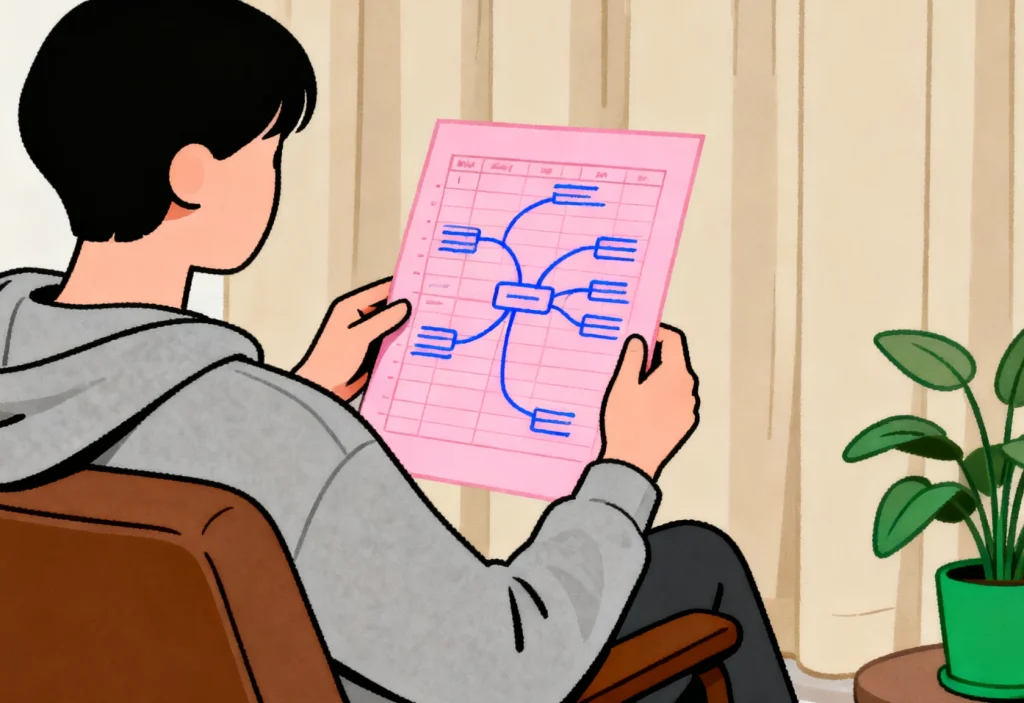
- The Four-Quadrant Rule
You can also use the “four-quadrant rule” to prioritize goals. Divide tasks into categories such as “urgent and important” (e.g., unexpected client requests), “important but not urgent” (e.g., skills learning), “urgent but not important” (e.g., last-minute meeting notifications), and “neither urgent nor important” (e.g., watching short videos). Prioritize completing “urgent and important” tasks each day. Reserve 70% of your time for “important but not urgent” tasks. This is key to differentiating abilities and is the core logic of time management.
2. Scientific Task Breakdown
Even after setting clear goals, many people still fall into a “procrastination cycle.” The core reason is that the tasks are too large and daunting. Breaking down large goals into smaller, actionable tasks is a crucial step in activating your time management system. For example, a “monthly project report” can be broken down into the following actionable steps:
Day 1: Estimated 2 hours to collect all relevant data and information
Days 2-3: Estimated 4 hours to organize and analyze data, and create charts
Day 4: Estimated 1.5 hours to write the report framework and table of contents
Days 5-6: Estimated 6 hours to fill in the specific content item by item
Day 7: Estimated 2 hours to revise, optimize, and finalize the report.
When breaking down tasks, special attention needs to be paid to controlling the time spent on each task. Ideal time management should meet the following standards:
A single task should not take more than 2 hours; otherwise, it is easy to feel fatigued. However, it should not be divided into too many smaller tasks. This can avoid wasting too much time on task breakdown and management. Each subtask should be independently executable and have a clear completion indicator.

- Allow Flexibility
A sound time management system must allow for “flexibility time.” Unexpected meetings, urgent tasks, or schedule delays are inevitable in the workplace. If the schedule is completely full, any delay will disrupt the entire plan. It is recommended to allocate 30%-40% of each day for handling ad hoc tasks or schedule adjustments. For example, plan to process emails from 9 to 10 am and write proposals from 10:30 am to 12 pm, leaving 30 minutes of flexibility in between. This allows you to handle unexpected situations while maintaining overall progress.
- Minimum Executable Unit
During execution, it is recommended to adopt the “minimum executable unit” principle. If a task still seems daunting, break it down further until you find a first step that you can immediately begin. At the same time, set clear completion criteria for each subtask. This ensures that task progress is trackable and results are measurable.
3. Tool and Method Adaptation
The right tools can make time management much more efficient. However, more complex tools are not necessarily better. The key is to adapt them to your own habits. Blindly pursuing trendy tools can increase operational costs and defeat the purpose of time management.
Regarding basic tools, a paper planner is suitable for people with concrete planning skills. It allows for intuitive task recording and prioritization. Electronic calendars like Outlook and Google Calendar facilitate task synchronization across multiple devices and offer reminders to prevent omissions. To-do list apps like Todoist and TickTick support task categorization and progress tracking. These are ideal for professionals managing multitasking. When choosing tools, follow the principle of “minimalism.” One or two tools are sufficient to cover your needs. Overusing tools can actually reduce efficiency.
The Pomodoro Technique is a powerful tool for improving focus. Use a 25-minute “Pomodoro” cycle. Focus on completing a single task within this time, then rest for 5 minutes afterward. Take a 20-minute break after four Pomodoro sessions. This method effectively combats procrastination and is especially suitable for tasks requiring high concentration.

The “time block management method” is suitable for multitasking scenarios. Divide the day into multiple “time blocks,” each focusing on a specific type of task. For example, handle core tasks from 9 to 11 am, coordinate and communicate from 2 to 4 pm, and engage in learning and self-improvement from 4 to 5 pm. This reduces distractions caused by task switching.
4. Cultivating Core Habits
The long-term effectiveness of a time management system relies on stable habits. Short-term plans are easy to stick to, but long-term self-discipline is key. Internalizing the principles of time management into habits is essential for achieving better performance.
First, cultivate the habit of “daily review.” Spend 10 minutes each evening reviewing the day’s task completion and analyzing why some tasks weren’t completed. Was it due to unreasonable task breakdown or distractions from irrelevant information? Record “time black holes,” such as an hour spent scrolling through your phone, and adjust your plans for the next day accordingly.
Second, practice the “focus principle.” Turn off phone notifications while working. Use “Do Not Disturb” mode to isolate distractions and reduce efficiency loss caused by frequent task switching.
Finally, maintain an awareness of “energy management.” The core of time management is “matching energy with time,” not simply squeezing time. Ensuring sufficient sleep, a balanced diet, handling core tasks during periods of high energy, and scheduling light tasks like organizing files during periods of low energy can all make time utilization more efficient.
Conclusion
Building an effective time management system is not a process that can be accomplished overnight. It requires continuous adjustment and optimization through practice. Remember, the ultimate goal of time management is not to “fill every minute,” but to make time a tool for achieving goals.
The changing times and ever-evolving job market can leave many people feeling lost and uncertain at some point in their careers. A new career direction might need to be sought. Whether due to industry changes, shifts in personal interests, or excessive work pressure and lack of motivation, changing career direction has become a major challenge for many. So, how do you find a new career direction? This article will offer some practical advice.
1. Assess Your Current Career Status
Before seeking a new career path, you first need to assess your current career status. This process can help you better understand your position in your current job and why you want to change. You can consider the following aspects:
- Interests and Passion
Are you passionate about your current job? If the work content makes you feel bored or unsatisfied, or if you develop an aversion to your work, then it might be time to consider changing career paths.
- Skills and Expertise
What skills have you accumulated in your current job? Can these skills be transferred to other industries or positions?
- Work Environment
Do your current work environment and team atmosphere meet your personal needs? If you feel overly stressed or have complex interpersonal relationships at work, it might be time to change jobs or reassess your career direction.
Career Development Opportunities
Are your growth opportunities in your current position limited? If you feel you have reached a plateau in your current job or there is no room for further development, then seeking a new career path may help you.
By reflecting on these questions, you can gain a clearer understanding of your current career status and why you want to seek a new career path.
2. Define Your Career Goals and Interests
One of the most important steps in finding a new career path is defining your career goals and interests. Consider the following questions:
- What Do You Truly Enjoy Doing
Have you ever had hobbies or passions outside of work that you loved but never had the opportunity to pursue?
These interests could become a new direction for your career. For example, if you have a strong interest in photography, writing, or design but haven’t been able to fully commit, you might consider turning these interests into a career. Understanding what you truly love can help you find a career path that aligns with your inner self.
- What Do You Hope to Gain From Your Work
Is it more challenges, higher income, or a better work-life balance? Clarifying your needs can help you narrow down your choices and find the career path that best suits you.
For example, some people pursue high income and are willing to endure high pressure, while others value a comfortable and stable work environment. Understanding your desired work situation and career goals can help you choose the most suitable field.

- What Contribution Do You Want To Make to Society
Some people hope to help others or improve society through their work. This “goal-driven” career choice can guide you to find a meaningful and fulfilling path. For example, working in public service, education, or the medical field. These jobs, where you feel valued, are not just about making a living but about bringing value to society and others. Considering how you hope to realize your social value through your career will help you choose more meaningful work.
Having a clear understanding of your interests and goals will make you more confident when choosing a new career, avoiding fields you’re not interested in, and ultimately finding a career path that truly suits you.
3. Expanding Knowledge and Skills
Once you’ve identified your initial career path, the next step is to prepare thoroughly for it. Career transitions often require new knowledge and skills, especially when moving to a completely different industry. Enhancing your competitiveness in this new field will help you adapt better to your new work environment. You can improve your abilities and qualities in the following ways:
- Attending Training Courses
Many online platforms now offer a variety of career-related courses, covering everything from technical skills to soft skills. By attending courses, you can gain theoretical knowledge and improve your problem-solving abilities. Try to choose courses related to your new career direction to enhance your relevant professional knowledge and skills. If your new field requires specific software usage or technical skills, learning these in advance will help you perform better in your new role.
- Obtaining Relevant Certifications
Obtaining industry-recognized certifications based on the industry you want to switch to can enhance your competitiveness in the job market. This also demonstrates your commitment and dedication to the new industry. For example, if you want to enter the IT industry, you can obtain relevant programming language certifications. If you’re transitioning to project management, you can obtain PMP certification. Relevant certifications can help you demonstrate sufficient professional competence to recruiters.
- Participating in Volunteer Work or Internships
Volunteer work or internships allow you to gain practical experience. This is a great way to understand the work content of a new industry and build industry connections. This not only enhances your understanding and adaptability to a new industry but also helps you showcase your practical experience during the job search process. Even unpaid volunteer work or short-term internships can provide valuable opportunities and resources to help you smoothly transition into a new field. Through continuous learning and experience accumulation, you can improve your overall qualities, prepare for finding a new career path, and enhance your competitiveness in new positions.
4. Networking and Industry Research
Building a broad industry network and conducting in-depth industry research are crucial in the process of finding a new career path. You can learn about the realities of different career paths and gather information to support your career transition through the following methods:
- Attending Industry Events and Trade Shows
Industry conferences, career fairs, and recruitment events provide opportunities to network with industry experts and peers, understand industry trends, and obtain employment information.
- Consulting a Career Planner
A career planner can provide you with professional career advice. They can help you assess your strengths and interests and offer specific suggestions for career transition.
- Utilizing Social Media
Follow professionals and companies in your target industry through social media platforms to stay updated on the latest industry developments. This is a window into understanding career development trends in different industries.
Industry Research and Interviews
If possible, proactively contact people in industries you are interested in and conduct in-depth interviews. Such conversations can provide a good understanding of the job content, development prospects, and entry barriers of that industry.
5. Gradual Transition and Experimentation
If you’ve already identified your new career direction and made the necessary preparations, the next step is to gradually transition into the new field. Career transitions don’t have to be a one-step process. You can take a gradual approach.
- Part-time or Side Hustle
If you’re considering switching to a completely new industry, you can start with a part-time job or side hustle to gain experience and understand the industry’s work content and culture.
- Gradual Transition
Sometimes career transitions can be done gradually. For example, you can choose a position or function related to your new direction within your current industry, gradually accumulate experience, and then move on to a larger transition.

- Maintain Flexibility and Adaptability
Maintaining an open mind and flexible adaptability is crucial during career transitions. If you find that a certain area isn’t suitable, you can adjust promptly and find a direction that better aligns with your interests and abilities.
Through these methods, you can smoothly transition into a new career field and avoid the discomfort caused by excessive shock during the transition process.
Conclusion
Finding a new career path is a long process. Career transitions require time, energy, and continuous effort. Maintaining a positive attitude and patience is crucial throughout this process. It’s essential to consciously adjust your mindset, accept the setbacks and challenges you may encounter, and learn and grow from them.
Seasonal Affective Disorder (SAD) is a mood disorder associated with seasonal changes. It is particularly common in the fall and winter months. This low mood can affect daily life and work and may even lead to mood swings, low energy, and a decreased quality of life.
Understanding the causes of SAD and how to effectively alleviate it is an important step in improving mental health. This article will introduce several common ways to cope with SAD to help you maintain a positive mindset and get through the colder season.
1. Get Plenty of Sunlight
Sunlight is the most natural and effective “remedy” for regulating your biological clock and boosting serotonin levels.
Morning sunlight is especially important for resetting your daily biological clock. When you wake up, try to open the curtains or engage in 15-20 minutes of outdoor activity in the morning. For example, have breakfast on your balcony or take a walk in your neighborhood. This effectively suppresses melatonin secretion, helping your body quickly enter a state of alertness and laying the foundation for a stable mood throughout the day.

Midday sunlight intensity is also ideal. A short midday walk not only replenishes vitamin D but also directly increases the levels of neurotransmitters in the brain associated with feelings of pleasure. This can effectively combat afternoon fatigue and low mood.
Indoors, consciously place your workspace, sofa, and other frequently used areas as close to windows as possible and keep the curtains open. This allows natural light to fill your living space to the maximum extent.
On rainy days or in areas with severely insufficient sunlight, light therapy lamps are an effective alternative. Using it for 20-30 minutes each morning can simulate the beneficial effects of natural light. This can help the body regain its rhythm.
2. Maintain A Regular Exercise Routine
Exercise can improve physical fitness. Exercise releases endorphins, which help relieve stress and anxiety. This can alleviate unpleasant emotions. Even in the cold winter, try to maintain a regular exercise routine. Yoga, brisk walking, and swimming are all good choices. Exercise promotes the release of endorphins, the “happy hormone,” thereby enhancing feelings of well-being and satisfaction. It is recommended to engage in aerobic exercise at least three times a week for 30 minutes each time.
3. Adjusting Your Dietary Habits
Diet and mood are closely related. Especially during seasonal affective disorder (SAD), a proper diet can effectively boost energy and mood. Foods rich in omega-3 fatty acids, vitamin D, and B vitamins, such as salmon, nuts, eggs, and whole-wheat bread, help improve brain function and stabilize mood. At the same time, avoid excessive intake of sugary and high-fat foods. These foods may provide energy in the short term, but they can cause blood sugar fluctuations, affecting mood.
In practice, it is recommended to increase the intake of foods rich in tryptophan. Such as bananas, milk, and meat. These foods are important raw materials for synthesizing serotonin. Also, supplement with appropriate amounts of complex carbohydrates, such as oats and sweet potatoes. These provide a stable energy release, avoiding mood swings caused by drastic blood sugar fluctuations. Magnesium is also crucial for mood regulation. Dark green vegetables, legumes, and dark chocolate are good sources. It is worth noting that maintaining adequate water intake is equally important. Dehydration can exacerbate fatigue and difficulty concentrating.
It is recommended to establish a regular meal schedule to avoid overeating or excessive dieting due to low mood. Establishing a stable and healthy eating rhythm is very beneficial for maintaining emotional balance. It is also a good way to relieve seasonal affective disorder.
4. Maintain Social Engagement
Seasonal affective disorder often triggers a tendency towards social withdrawal. This leads to an unconscious reduction in contact with others, which often creates a vicious cycle of “low mood—loneliness—even lower mood.” Consciously maintaining social connections is key to breaking this cycle. It is recommended to develop a specific social plan. For example, have lunch with friends weekly, and attend book clubs or interest groups. This regular social arrangement is more effective than passively waiting for invitations.
When the weather is bad outdoors, make full use of online platforms. Stay connected with distant relatives and friends through video calls, or participate in online themed salons, gaming communities, etc. The focus of socializing is on quality, not quantity. Being able to spend time with friends and family you like can alleviate the discomfort caused by seasonal affective disorder. Maintain connections with “energy givers” who offer understanding and support, avoiding superficial social interactions.

Outdoor activities combined with sunlight are ideal. For example, arrange a daytime walk in the park, visit a museum together, or go to a winter market. This arrangement provides both social support and increased natural light. If you feel pressured to confide in someone face-to-face, you can start by doing something together, such as cooking or crafting, gradually opening up through natural interaction.
5. Seek Psychological Counseling
If seasonal affective disorder symptoms are severe and even impact daily life, please seek professional psychological counseling or treatment. Cognitive behavioral therapy (CBT) is a highly effective psychotherapeutic method. It helps patients identify and adjust negative thought patterns and improve their emotional state. Communicating with a professional psychologist or counselor can help you better understand yourself and learn to manage and regulate your emotions.
6. Maintaining Good Sleep Habits Is Essential
Seasonal mood disorder is often accompanied by sleep disturbances. Less daytime sunlight and difficulty falling asleep at night can easily disrupt the body’s circadian rhythm. This affects sleep quality. Maintaining a regular sleep schedule and creating a suitable sleep environment can help improve sleep. Keeping the bedroom quiet and at a comfortable temperature and avoiding excessive use of electronic devices before bed can all improve sleep quality. Good sleep helps the body recover and boosts energy and mood.
7. Cultivating Hobbies
Developing and consistently engaging in activities you enjoy can effectively distract you and reduce focus on negative emotions. Whether it’s reading, painting, photography, listening to music, or doing crafts, hobbies can add fun to life and enhance inner happiness. These activities not only help relax the mind and body but also increase self-satisfaction and strengthen resilience.
Conclusion
Seasonal mood swings are a common psychological phenomenon, but they can be alleviated and effectively improved through some scientifically sound methods. If you feel that your mood problems are severe, it is recommended to seek professional help as soon as possible. Remember, maintaining a positive attitude and proper self-regulation can help us get through each season smoothly and embrace a healthier and happier life.
Every autumn and winter, many people inexplicably experience seasonal affective disorder (SAD). Common symptoms include daytime lethargy and loss of interest in previously enjoyed activities. Sometimes, this is even accompanied by increased sleep and appetite. This low mood gradually subsides with the arrival of spring and summer.
This mood fluctuation that synchronizes with seasonal changes is known as “Seasonal Affective Disorder.” It’s not simply a bad mood but rather the result of multiple factors, including physiological factors, environmental factors, and lifestyle rhythms. Understanding its underlying causes can help us cope more rationally with these cyclical mood changes.
1. Changes in Light Exposure
Light exposure is the most crucial physiological factor influencing seasonal affective disorder (SAD). It is the “invisible culprit” that disrupts the body’s circadian rhythm. The body’s biological clock and the secretion of serotonin and melatonin depend on the intensity and duration of light exposure. In autumn and winter, daylight hours are shorter and light intensity is weaker. This directly disrupts this balance. From a physiological perspective, serotonin, known as the “happy hormone,” helps maintain a pleasant and alert state. Its secretion is positively correlated with light exposure. When light exposure decreases, the synthesis of serotonin in the brain slows down, and its levels decrease accordingly. As a result, people are more prone to low mood and lack of energy.

At the same time, the secretion of melatonin, the hormone that regulates sleep, increases due to reduced light exposure. This makes people feel more sleepy and drowsy, further exacerbating “mental fatigue.” This hormonal imbalance acts like a slow-motion button on the body, causing mood swings. This phenomenon occurs more frequently in high-latitude regions. Because daylight hours are significantly shorter in high-latitude regions during autumn and winter, the incidence of seasonal affective disorder (SAD) is also significantly higher than in low-latitude regions.
2. Changes in Environment and Temperature
The changing environment and temperature brought about by seasonal transitions are significant catalysts for exacerbating low mood. This is also an external trigger that amplifies low mood. On the one hand, the lower temperatures in autumn and winter cause everything to wither. Withered leaves and faded flowers make the once colorful environment monotonous and gloomy. From a psychological perspective, human visual perception of the environment directly affects emotions. Gray and bleak scenes easily evoke associations with “endings” and “loneliness.” This can further trigger feelings of loneliness and depression.

On the other hand, cold weather limits people’s outdoor activities. Outdoor activities that would normally involve walking, exercising, and socializing become difficult to participate in due to the cold. People tend to stay indoors rather than go out for social activities. Personal activity levels also decrease significantly. Exercise itself promotes the release of endorphins, the “happiness factor” that relieves stress. Insufficient activity leads to reduced endorphin synthesis, resulting in ineffective stress release. Feelings of depression are also more likely to occur. Furthermore, poor air circulation in enclosed indoor environments can indirectly affect mental state, making low moods more difficult to alleviate.
3. Changes in Lifestyle and Accumulated Stress
Seasonal changes often bring adjustments to lifestyle rhythms, and the resulting stress can further exacerbate seasonal affective disorder (SAD). These two factors are “invisible weights” that amplify emotional burden. The most typical example is that autumn and winter often overlap with the “year-end wrap-up” and “peak holiday season.” Many people face the pressure of year-end assessments and project sprints. Students, on the other hand, face final exam preparation. The approaching holidays can also cause anxiety due to “unfulfilled year-end goals” and “social pressures.” These pressures, combined with the inherent seasonal mood swings, make feelings of depression more pronounced.

Meanwhile, reduced social activities in autumn and winter also indirectly affect mood. In summer, people are more willing to go out for parties and travel. The social interaction brought by these activities provides a sense of belonging and pleasure. The cold weather in autumn and winter reduces the frequency of social interaction. Loneliness also quietly spreads. Especially for people living alone or with a narrow social circle, this “social disconnect” can lead to a lack of positive emotional feedback, further trapping them in a cycle of depression.
4. Individual Differences
An individual’s physiological and psychological traits form the “intrinsic basis” for their sensitivity to seasonal mood changes. This difference explains why, under the same environmental changes, not everyone suffers from seasonal affective disorder (SAD), and the degree of its impact varies from person to person.
From a genetic perspective, research shows that SAD has a certain familial inheritance tendency. If an individual’s parents or siblings have similar conditions, their probability of experiencing SAD increases. The underlying biological mechanism lies in the fact that certain genes may affect the brain’s efficiency in processing light signals, as well as the synthesis and metabolic rate of neurotransmitters such as serotonin and melatonin. This innate sensitivity makes the biological rhythm system and mood regulation center of some individuals react more strongly and profoundly to changes in light duration and temperature.
From the perspective of personality traits and lifestyle habits, an individual’s psychological resilience and daily behavioral patterns are also key variables. Introverted and sensitive individuals tend to have stronger internal reactions to external environmental stimuli. People with lower stress tolerance and a lack of effective mood regulation strategies are more prone to experiencing mood swings during seasonal transitions.

Meanwhile, unhealthy lifestyle habits such as irregular sleep patterns, lack of exercise, and unbalanced diets can weaken the stability of the body’s nervous and endocrine systems. This reduces the body’s ability to adapt to and buffer against external changes such as climate, thus increasing the risk of seasonal affective disorder (SAD).
Furthermore, for individuals who have experienced significant psychological trauma or are under chronic stress, their emotional state is already like a “tightly wound string.” At this time, seemingly minor discomforts such as reduced sunlight and lower temperatures caused by seasonal changes can become the “final trigger” that disrupts psychological balance and causes significant mood swings. Therefore, understanding and valuing these individual differences is a crucial prerequisite for effective prevention and personalized intervention.
Conclusion
In short, seasonal affective disorder (SAD) is the result of a combination of physiological, environmental, life stress, and individual differences. It is not a “personality flaw,” but rather one of the body’s normal responses to seasonal changes. By understanding its causes and proactively taking regulatory measures, we can better adapt to the changing seasons and reduce the impact of seasonal fluctuations on our emotions.
“It’s okay to put it off for a bit.” “I can still do it tomorrow.” “There’s still plenty of time.” Do these thoughts frequently cross your mind? This is a classic sign of procrastination.
Procrastination isn’t simply laziness; it’s a complex issue involving psychology, behavior, and time management. Chronic procrastination can lead to a backlog of tasks, heightened anxiety, and even negatively impact work efficiency and quality of life. To overcome procrastination, you must first understand its causes and then gradually adapt using scientific methods to make timely action a habit.
1. Causes of Procrastination
Many people attribute procrastination to “lack of self-control,” but there’s actually a deeper psychological logic behind it. Only by identifying the root causes can we better address them. First, there are psychological factors.
When faced with a difficult and stressful task, such as writing a complex report or preparing for an important exam, the brain instinctively avoids the risk of failure. So, people turn to relaxing activities like browsing their phones or watching TV series to distract themselves. Over time, this creates a procrastination habit of “avoiding it first, then worrying about it later.”

Second, there’s the “ability factor.” Some people always want to “do it right the first time.” Fearing they won’t achieve their expectations, they hesitate to take action. For example, when writing an article, they might struggle to write a single sentence after a long time, ultimately putting the task aside.
Finally, there are “environmental factors.” For example, being in a noisy or distracting environment makes it difficult for most people to work or think. Or perhaps someone has been criticized and blamed by others before, making it impossible to start something. Because once you start, you immediately think back to the bad feeling you had when you were rejected.
2. Methods for Overcoming Procrastination
Solving procrastination doesn’t require a complete “all-at-once” solution. Start with simple, small steps and then gradually build action habits to make your actions more effective.
Task Breakdown
When faced with complex tasks, feeling overwhelmed is a major cause of procrastination. Break down tasks into “minimal action units.” For example, break “writing a 1,000-word article” into “collecting three case studies,” “writing a 200-word introduction,” and “organizing five core points.” Each small task should take no more than 30 minutes. This “fragmented” approach can reduce psychological stress. Every time you complete a small task, you’ll feel a sense of accomplishment, which will make you more willing to move on to the next one. This creates a virtuous cycle of “action and positive feedback.”
The Pomodoro Technique
Procrastination is often linked to a lack of time management. The Pomodoro Technique can help you establish clearer time boundaries. The steps are simple. You set a 25-minute Pomodoro. Focus on one task during these 25 minutes. No checking your phone, replying to messages, etc. Take a 5-minute break after each Pomodoro. After completing four Pomodoros, take another 20-30-minute break. These “short bursts of focus followed by timely breaks” can alleviate fatigue from long workdays. The anxiety of time running out will force you to quickly get back into work and study mode.

Practice in A Positive Environment
Environmental distractions can be procrastination boosters. For example, having a phone next to your desk can make it hard to keep unlocking it. Time spent on your phone often flies by. Hours can slip by unnoticed. Also, being surrounded by noisy people or loud broadcasts can make it difficult to concentrate.
To reduce procrastination, you need to optimize your environment. Remember this: if you can’t resist temptation, then avoid it. When you start working or studying, put your phone in “focus mode” or put it away. Use a paper notebook to keep track of your to-do list instead of relying on your phone. A clean workspace is also essential. Clean your desk until only the items you need for the task at hand are left. For example, when writing a report, keep only your laptop, documents, and pens. If you’re easily distracted at home, consider going to a library, cafe, or other place with a strong learning atmosphere. Using the “constraint” of the environment can also help boost your motivation.

Timely Review and Adjustment
Changing procrastination isn’t something you can do overnight. It requires regular review and timely adjustments. Every night before bed, take a few minutes to review your day: Which tasks were completed on time? Which tasks were delayed? What caused the procrastination? Is it because the task was too difficult, distractions arose, or you simply weren’t focused enough? Then, based on the results of this review, optimize your plans for the next day. For example, schedule difficult tasks in the morning when you’re most energetic. Use distraction-prone times for simple tasks. Also, set yourself small rewards, such as watching an episode of your favorite show or enjoying a delicious meal after completing your daily tasks. Use positive motivation to make not procrastinating a habit worth sticking to.
3. Common Misconceptions About Overcoming Procrastination
Many people easily fall into misconceptions when battling procrastination. This can actually make procrastination worse. So, be aware of the following two common misconceptions.
First, excessive self-blame. Some people, after procrastinating, repeatedly blame themselves for being “useless” or having “poor self-control.” This negative emotion further reduces motivation and creates a vicious cycle of “procrastination-self-blame-more procrastination.” In fact, occasional procrastination is normal, and there’s no need to be overly critical of it. The key to overcoming procrastination is analyzing the causes and adjusting your approach, rather than dwelling on negative emotions.
Second, the pursuit of perfection. Some people spend countless hours crafting minute-by-minute plans, yet they never take action. They believe, “I can’t start until the plan is perfect.” In reality, even the most perfect plan requires concrete action to be realized. It’s better to start with simple actions and gradually refine your plan through practice. This is more meaningful than just empty talk.
Conclusion
Procrastination isn’t an incurable “illness.” It’s a behavioral habit that can be adjusted through scientific methods. From breaking down tasks and managing time to optimizing your environment and regularly reviewing your progress, each step can help you move further away from procrastination and closer to effective action. Remember, the key to change isn’t “achieving perfection all at once” but “making incremental progress every day.” When action becomes instinctive, procrastination will naturally disappear.