Growth does not always feel graceful.
Sometimes, it feels awkward.
Sometimes, it feels uncertain.
Sometimes, it makes you question whether you are ready.
But discomfort does not always mean you are doing something wrong. It may simply mean you are learning how to move in a new direction.
This is easy to forget.
When something is new, the mind often interprets it as difficult. The unfamiliar can feel like resistance. A new role, a new responsibility, a new level of visibility, a new business challenge, or a new way of thinking can all feel uncomfortable at first.
It feels hard because it is new.
Give yourself time to grow into it.
That does not mean you are behind. It does not mean you are failing. It does not mean you are not capable.
It may simply mean you are becoming familiar with the next version of yourself.
For Bonnie Wu, strategic leadership coach, mindset is not about forced positivity. It is not about pretending every challenge is easy.
It is about learning how to interpret what you are experiencing with more clarity.
Growth often feels unfamiliar before it feels natural.
- The first time you lead at a new level, it may not feel smooth.
- The first time you build a new habit, it may not feel automatic.
- The first time you set a stronger boundary, it may not feel comfortable.
- The first time you make a bigger decision, it may not feel easy.
But ease is not always the starting point. Sometimes, ease is built through practice.
That is why the books we return to matter.
The right book does more than give information. It helps us notice our patterns, question our assumptions, and return to our daily practice with more clarity.
Here are three books worth revisiting for mindset, focus, and growth.
Atomic Habits by James Clear
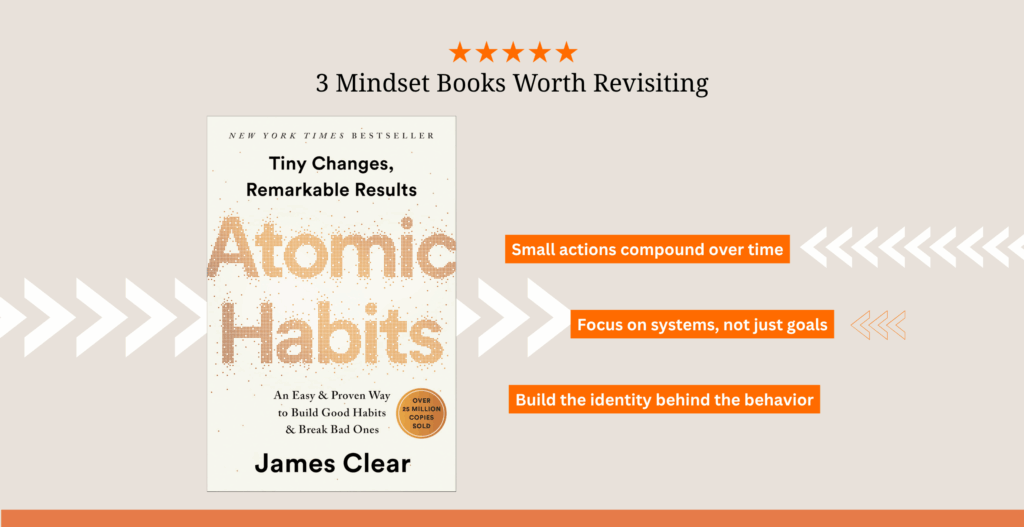
Atomic Habits is a practical reminder that meaningful change is often built through small actions repeated consistently.
- It shifts the focus from big goals to daily systems.
- It shows how identity shapes behavior.
- It makes consistency feel practical, not overwhelming.
This connects deeply with The Daily Practice because real transformation rarely comes from one dramatic decision. More often, it comes from the small choices we repeat until they become part of who we are.
Stumbling on Happiness by Daniel Gilbert
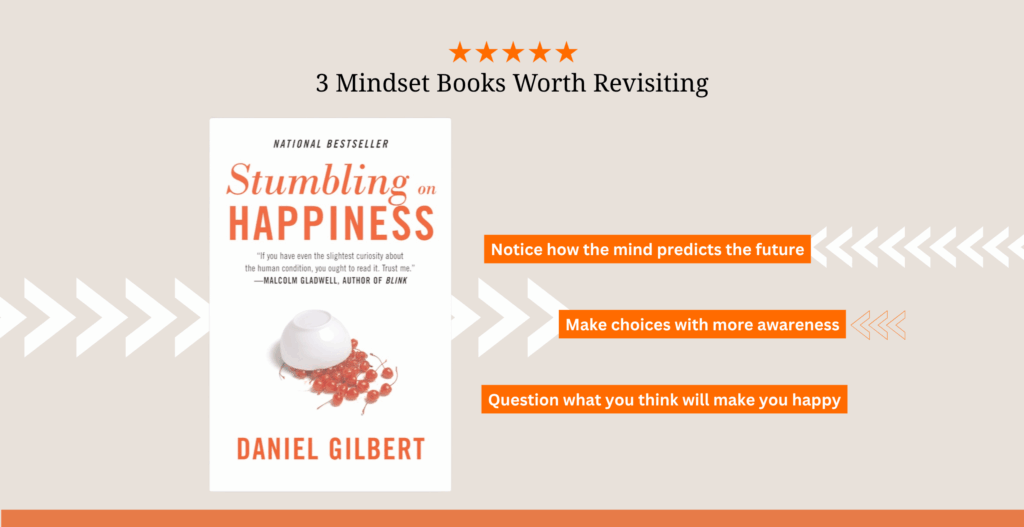
Stumbling on Happiness invites us to question how we imagine the future.
It explores how the mind predicts what will make us happy, and how often those predictions can be incomplete.
For anyone building a life, business, or leadership path with intention, this is an important reminder.
We do not always make decisions based on reality. Sometimes, we make them based on what we imagine will bring certainty, success, or happiness.
When we understand this, we can make choices with more awareness.
Flow by Mihaly Csikszentmihalyi
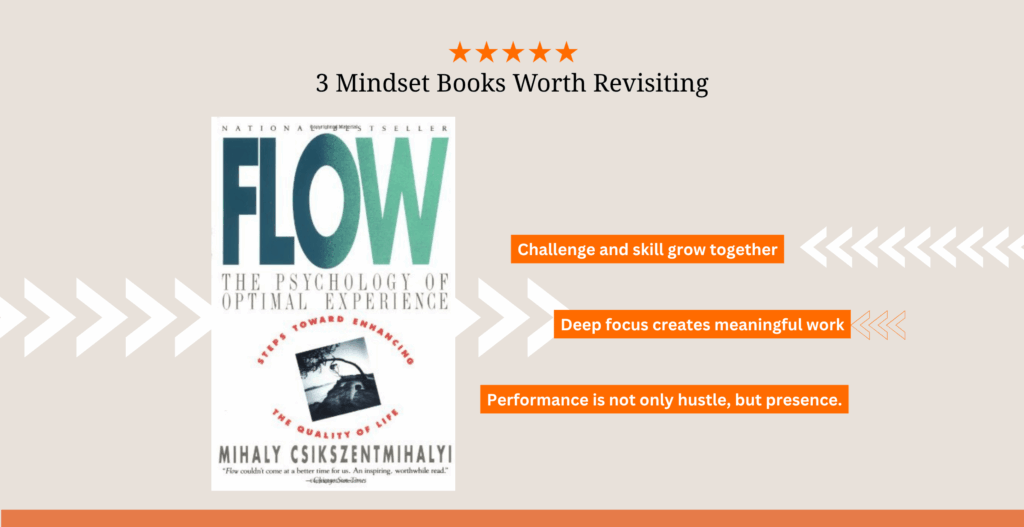
Flow explores the state of deep focus and full engagement.
It reminds us that meaningful work is not only about effort. It is also about attention, presence, challenge, and skill.
This is a powerful idea for entrepreneurs, leaders, and builders.
Performance is not always about pushing harder. Sometimes, it is about creating the conditions that allow your best work to emerge.
Conclusion
Together, these three books point to a simple idea:
Growth is not only about doing more.
It is about thinking more clearly. Practicing more intentionally. Building systems that support who you are becoming.
New growth rarely feels natural at the beginning.
It can feel awkward, uncertain, or slower than expected.
But unfamiliar does not mean wrong.
- Give yourself time.
- Give yourself grace.
- Give yourself permission to grow into it.
That is The Daily Practice.