Modern life is fast-paced, and with work pressure, more and more people find their work and rest chaotic: the later the night, the more mental fatigue, but daytime drowsiness. In the long run, this will affect work efficiency and mood but also may cause obesity, immunity decline, depression, and other health problems. This is a circadian rhythm disorder.
The biological clock is the body’s internal time management system, controlling sleep, diet, hormone secretion, and other physiological functions. Once the rhythm is disrupted, our body will lose its vitality.
The good news is that you can restart your circadian rhythm naturally in just 3 simple steps. In this article, we will systematically explain how to adjust it scientifically so that you can restore your healthy routine and welcome every morning full of energy.
Why is the Circadian Rhythm Disturbed?
Before you start adjusting your biological clock, you first need to figure out what makes it go off the rails. Understanding these triggers will help you avoid repeating the same mistakes in subsequent changes.
Excessive Exposure to Blue Light at Night Disrupts Melatonin Secretion
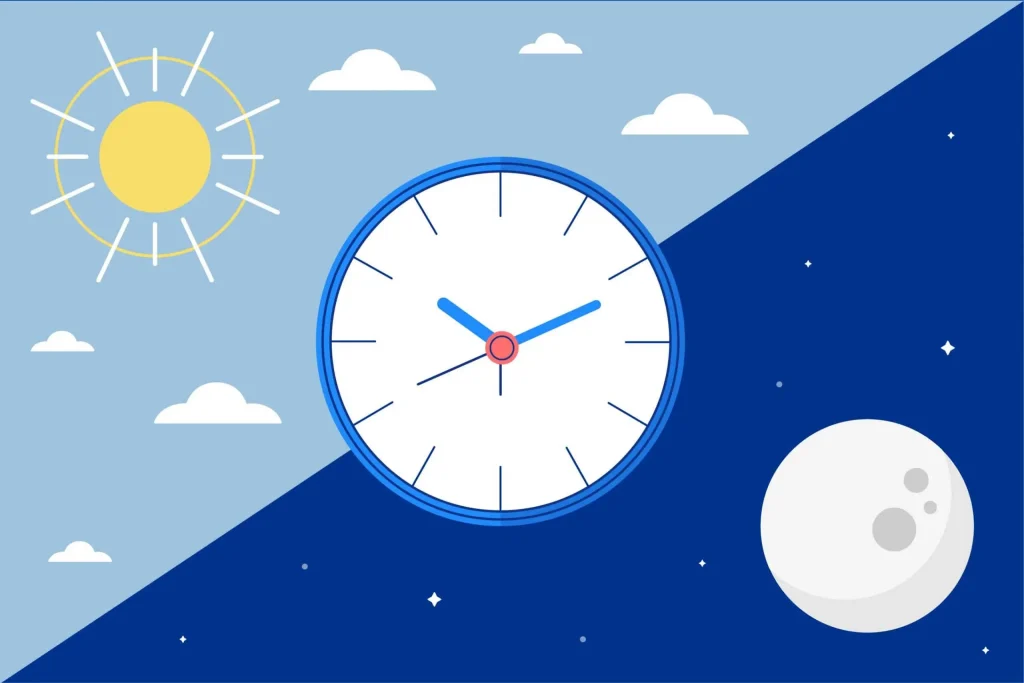
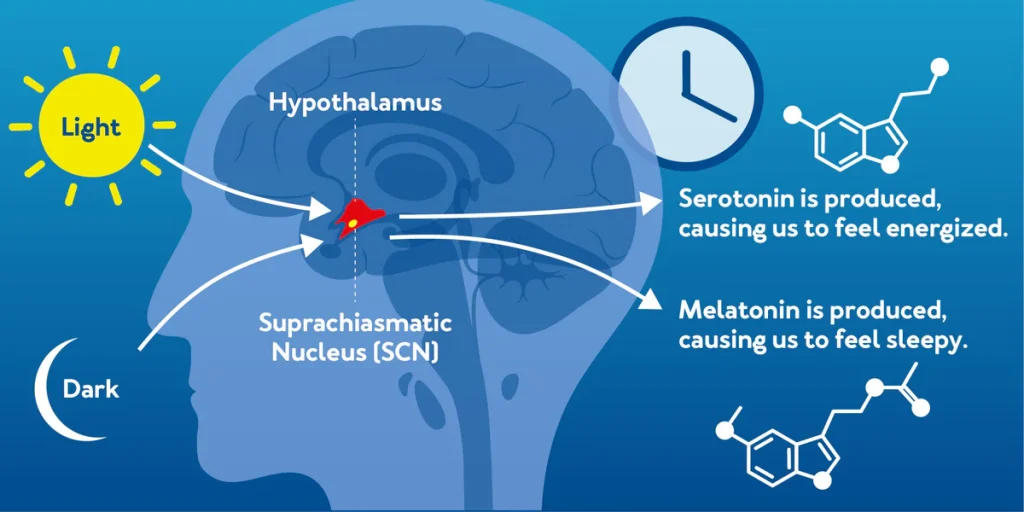
Modern life is inseparable from electronic devices. Cell phones, computers, and tablets emit blue light that will inhibit the secretion of melatonin (a hormone that regulates sleep-wake rhythms) so that the brain mistakenly thinks that “the day is not over,” thus delaying the time to fall asleep.
Studies have shown that exposure to blue light for 2 hours at night can reduce melatonin levels by about 22%. Long-term, it’s so easy to form delayed sleep phase syndrome, that is, the later, the more awake.
Practical Advice: Turn off all light-emitting screens 1-2 hours before bedtime, or use blue light filtering software or night mode to minimize the impact.
Irregular Work and Rest Disrupts the Rhythm of the Biological Clock
Frequent late nights, late risers, shift work, or frequent travel across time zones will disrupt the rhythm of the brain’s “master clock”—the ”suprachiasmatic nucleus (SCN).
The SCN is responsible for coordinating the biological clock of cells throughout the body, and if it is disrupted, the body’s systems will be out of sync, leading to daytime sleepiness and insomnia at night.
The Double Impact of Diet and Stress
Late-night binge drinking and consuming large amounts of caffeine or sugar can delay the biological clock of the digestive system and liver, affecting the overall rhythm. Chronic mental stress and anxiety can lead to persistently high levels of cortisol (the stress hormone), disrupting melatonin secretion and creating a vicious cycle.
Practical Advice: Keep dinner light and avoid high-sugar and high-fat foods before bedtime; set aside time each day for meditation or deep breathing exercises to help the nervous system relax.
3 Steps to Naturally Reset Your Biological Clock
After clarifying the causes of the disorganized biological clock, let’s look at this 3-step scientific adjustment program. Each step will be gradual and help you naturally synchronize your internal clock with the outside time.
Step 1: Natural Lighting in the Morning to Reboot the Brain
Natural light is the most powerful biological clock regulator. Your exposure to sunlight as soon as you wake up in the morning signals to your brain that it’s daytime. This will have the effect of helping your melatonin levels drop and cortisol rise moderately, allowing you to wake up quickly.
A study in the journal Nature noted that people who got 30 minutes of sunlight in the morning fell asleep nearly an hour earlier than those who didn’t and had significantly better quality sleep.
Practical Tips:
Get up and go for a walk outside or sunbathe for 20-30 minutes within an hour, which is effective even on cloudy days.
When you can’t go outside, consider using a light therapy lamp for 20-30 minutes each morning to simulate natural light.
Step 2: Establish a Stable Routine to Reinforce Your Body’s Sense of Time
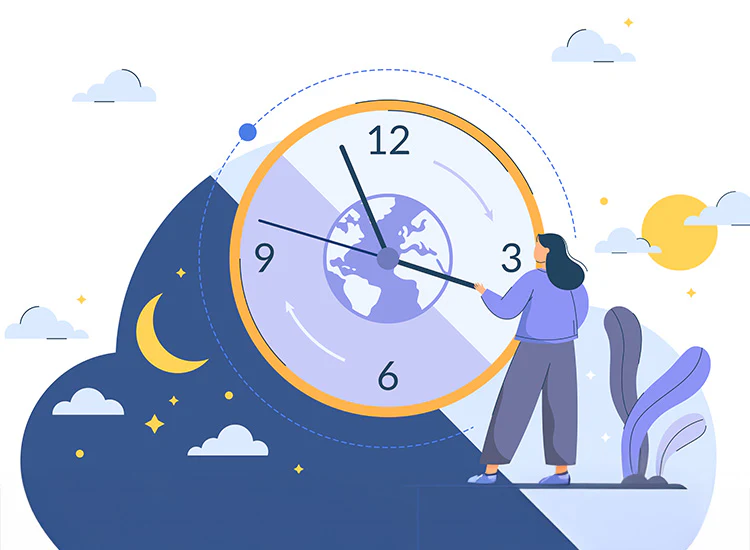
One of the most effective ways to rebuild your biological clock is to establish a consistent routine. Even on weekends, you need to maintain a relatively consistent sleep and wake-up time to avoid “social jet lag” that can re-disturb your rhythm.
Suggestions:
- Wake up and go to bed at a regular time every day, even if you went to bed late the night before, so that you don’t have to make up for too much sleep.
- Establish bedtime rituals, such as taking a hot bath, reading, or listening to soft music, to help your body enter a state of relaxation.
- Avoid taking long naps during the day; if you need to take a break, it is recommended to limit it to 15-20 minutes.
Step 3: Support Rhythm Rebuilding with Diet and Exercise
Diet and exercise habits are also subtly affecting your circadian rhythm.
Dietary modifications: Dinner should not be served too late, and avoid eating within 2 hours of bedtime. Breakfast with high-quality protein (e.g., eggs, yogurt) will help you wake up in the morning.
Exercise: Aerobic exercise (e.g., jogging, cycling, or yoga) 3-5 times a week can help improve sleep quality. However, it is important to avoid strenuous exercise within 2 hours before bedtime to avoid nervous system excitation.
Caffeine management: Try not to consume coffee, strong tea, and energy drinks after 3 pm.
Conclusion
The biological clock is the invisible guardian of human health. When it is out of whack, our sleep, mood, metabolism, and even immunity will be affected. By taking 3 simple steps—getting sunlight in the morning, fixing your routine, and adjusting your diet and exercise—you can naturally reset your biological clock and get your life back on track.
Start taking action tonight to get your body in sync with its natural rhythms again for an energized day!